Should Your Plumbing Shop Bid on Lead Service Line Replacement Work?
A federal rule puts most water systems on a deadline to replace the lead service lines they control. Here's how that work reaches local plumbing shops, and how to tell if yours should go after it.
A plumbing shop is well positioned for lead service line replacement work if it already does water service and excavation work, can meet its local water utility’s contractor and insurance requirements, and has the crew capacity to commit to a multi-year program. A federal rule has put most water systems on a replacement deadline, so in many areas the work is coming. How much of it gets contracted out, and on what terms, is decided utility by utility.
That’s the short answer. The part most shops miss is that this work is bought differently than the jobs they normally quote.
What the rule actually requires
In October 2024, the EPA finalized the Lead and Copper Rule Improvements, known as the LCRI. It applies to community water systems and non-transient non-community systems, the kind that serve the same people regularly, such as a town, a school, or a workplace with its own supply. It does not apply to transient non-community systems.
The scope of the replacement mandate matters, and it is narrower than the headlines suggest. In EPA’s own words, a system that is not eligible for a deferred deadline “must replace all lead and GRR service lines that are under the control of the water system in 10 years or less.” GRR means galvanized requiring replacement. Two limits are doing real work in that sentence:
- “Under the control of the water system.” Where a system lacks legal or physical access to a line, for example when a property owner will not give consent, that line is not currently required to be replaced.
- Deferred deadlines. Systems with an unusually high share of lead lines can qualify for more than 10 years. EPA estimates about 1% of water systems will be eligible.
Most other core requirements, including the baseline inventory, the replacement plan, and a lead action level lowered from 15 to 10 parts per billion, carry a compliance date of November 1, 2027.
Why this work behaves differently
This is not a homeowner calling with a problem. It’s a municipal or utility procurement process, and it runs on different rules than the service calls filling your schedule now:
- Not every utility contracts it out. Some use their own distribution crews, some hire contractors, and many do a mix depending on the neighborhood and the workload. Whether there’s bid work near you is a local question worth asking before you build a plan around it.
- It’s bid, not booked. Where utilities do contract, they put replacement programs out for bid, often in bulk. You’re responding to a solicitation on their timeline, not quoting a job in a driveway.
- The paperwork is the barrier to entry. Bonding, insurance minimums, licensing, and prequalification packets. Shops usually lose here before they lose on price.
- The volume is steady but committed. A replacement contract can keep a crew busy for months, which is valuable and also risky. Those are the same crew hours you can’t sell to your regular service customers.
- The customer contact still lands on you. Even when the utility hires you, the homeowner whose yard you’re digging up calls the plumber, not the water department.
Signs your shop should go after it
1. You already do water service line and excavation work
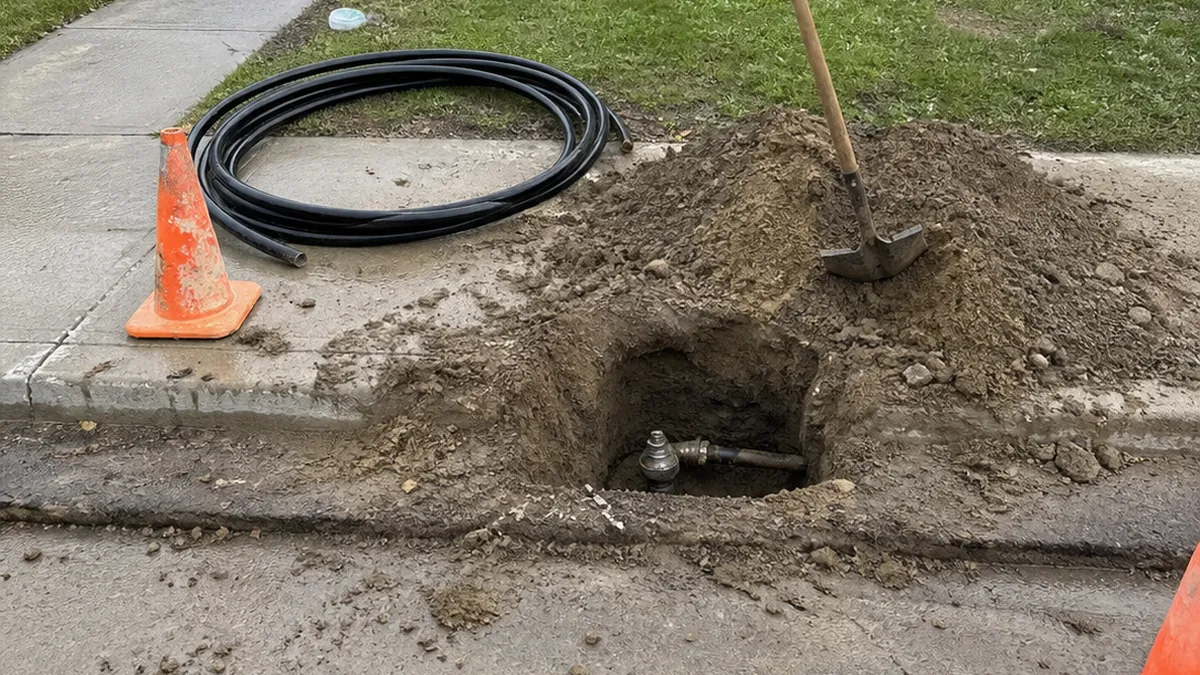
If you’re running service line replacements and have the equipment and comfort working in the right of way, this is adjacent work, not a new trade. Shops already doing trenchless and underground work have a short path in, since some replacement programs allow trenchless methods.
2. You can carry the bonding, insurance, and paperwork
This is the real filter. Utility contracts routinely require bonding and insurance levels above what a small residential shop carries. Getting that in place costs money before you’ve earned a dollar, so it only makes sense if you intend to bid repeatedly, not once.
3. You have crew capacity you can commit
A multi-month contract needs crews you can actually spare. If hiring is already your bottleneck, taking on committed municipal volume can quietly starve the service side of your business that pays the bills year-round.
How to find out what’s happening in your area
Start with your own water utility, and ask rather than assume. Systems had to produce an initial inventory under the earlier rule, but the LCRI baseline inventory and the service line replacement plan are not due until November 1, 2027. In the meantime, plenty of systems still carry service lines classified as unknown, so your utility may not yet have a final count or a settled replacement schedule.
The useful questions are whether they contract this work out at all, how contractors get on the bid list, and where they are in sorting out their unknowns. Your local and state PHCC chapter is the other place to ask. Tracking regulatory changes and connecting members to that kind of work is exactly what trade association advocacy is for.
Decision checklist
Lead service line replacement work is more likely to make sense for your shop if:
- You already perform water service line replacements and excavation
- Your local water system actually contracts this work out
- You can meet utility bonding, insurance, and prequalification requirements
- You can commit crew hours for months without starving your service business
- You intend to bid on this work repeatedly, not treat it as a one-off
Frequently asked questions
Who pays for lead service line replacement? It varies by water system and by which portion of the line is being replaced. Many programs are funded through the utility, often supported by state or federal drinking water funds. Your local utility’s replacement plan is the authority for how it works in your area.
Do plumbers need a special certification for lead service line replacement? There’s no single national credential. Requirements are set by the water utility and your state or local licensing authority, and usually center on licensing, bonding, insurance, and prequalification with the utility rather than a specific lead certification.
How do plumbing contractors get on a utility’s bid list? Contact the water system directly and ask about contractor prequalification for their replacement program. Each utility runs its own solicitation and prequalification process. Be aware that federally funded work carries its own conditions on top of the utility’s: projects supported through the Drinking Water State Revolving Fund, for example, come with federal requirements that the utility will pass through to contractors.
Is this work worth it for a small shop? It can be, but it favors shops that already do underground service work and can carry the bonding and insurance. A shop without those things usually spends more getting qualified than it earns on a first contract.
The takeaway
Lead service line replacement is a rare thing in this trade: demand created by a federal requirement with a deadline attached, rather than demand you have to market for. That makes it worth understanding even if you decide not to bid. Just confirm the specifics locally first, because how much work is contracted out, and when, depends on your utility rather than on the federal deadline alone.
However the work reaches you, it still starts with someone reaching your shop. The shop that answers first is the one that gets the conversation. See a 10-minute demo.