Is That Fitting Actually Lead Free?
Learn what lead free means under federal law, how NSF/ANSI 61 differs from NSF/ANSI 372, and how to check fittings before potable installation.
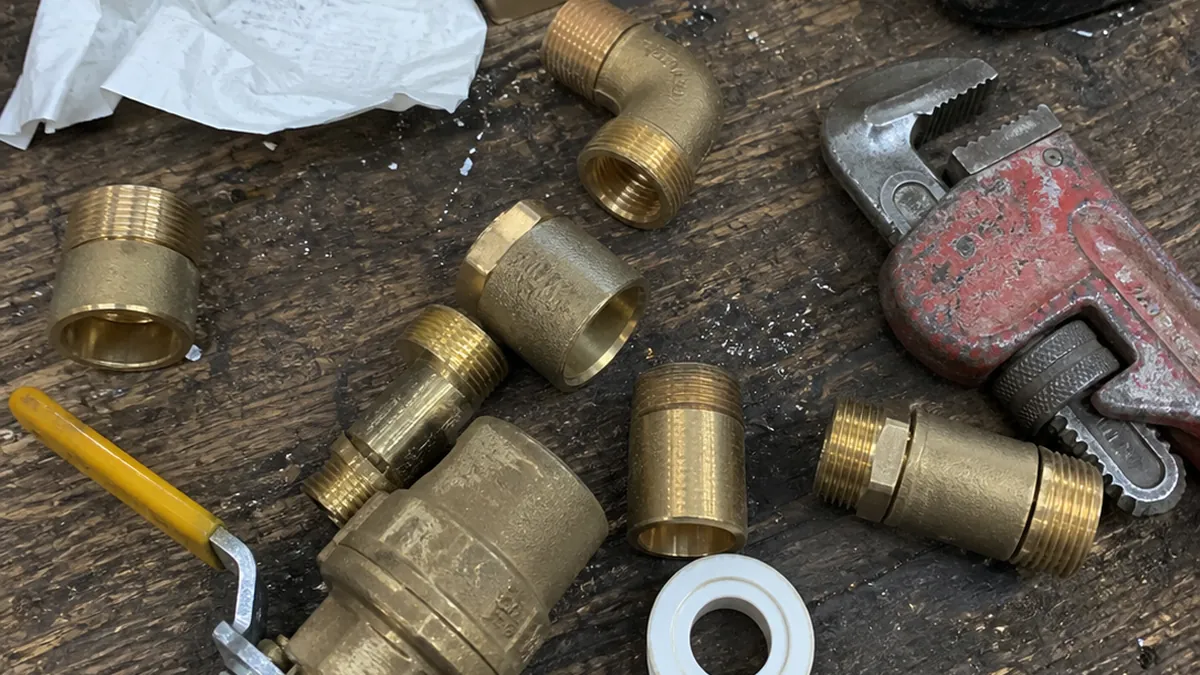
A lead free fitting for potable water must meet the Safe Drinking Water Act limit of no more than a 0.25% weighted average lead content across its wetted surfaces. To confirm compliance, check the product’s current certification listing, not just the wording on the package, and verify that its certification covers NSF/ANSI 372 or a current NSF/ANSI 61 listing that requires compliance with NSF/ANSI 372.
The practical version is simple: you need to know what you are buying before it goes into a drinking water system.
What does “lead free” actually mean under federal law?
“Lead free” does not mean that every part contains absolutely zero lead. It is a legal specification with a calculation behind it.
The EPA lead free requirement defines lead free as a weighted average of no more than 0.25% lead across the wetted surfaces of pipes, pipe fittings, plumbing fittings, and fixtures. The same law sets a separate limit of 0.2% lead for solder and flux.
That distinction matters when you review a submittal, check an unfamiliar fitting, or approve material purchased by someone else. A product described as “low lead,” “safe,” or “for plumbing” has not necessarily demonstrated compliance with the federal definition.
The Reduction of Lead in Drinking Water Act amended Section 1417 of the Safe Drinking Water Act. Congress enacted it in 2011, and its requirements became effective on January 4, 2014. The EPA released a final rule on July 29, 2020 that codified the Act and the Community Fire Safety Act of 2013.
As of September 1, 2023, manufacturers and importers must certify that covered plumbing products meet lead free requirements when introducing those products into commerce. The rule generally requires third-party lead content certification by an ANSI-accredited certification body. An exception applies to manufacturers with fewer than 10 employees, and custom fabricated plumbing products may be self-certified.
You still need enough information to match the certification to the exact manufacturer and model you plan to install.
What do NSF/ANSI 61 and NSF/ANSI 372 actually certify?
The two standards answer different questions.
NSF/ANSI 61, “Drinking Water System Components, Health Effects,” addresses what may migrate from a material or component into drinking water. It is concerned with the health effects of substances that can leach or extract into the water.
NSF/ANSI 372, “Drinking Water System Components, Lead Content,” evaluates the lead content of the material itself. It provides the method used to verify the 0.25% weighted average across wetted surfaces.
This difference has a historical wrinkle that can cause confusion. The lead content evaluation procedure once appeared in Annex G of NSF/ANSI 61. That procedure was later retired from NSF/ANSI 61 and moved to NSF/ANSI 372.
Because of that history, some products certified to NSF/ANSI 61 were not evaluated to NSF/ANSI 372. At the same time, the current edition of NSF/ANSI 61 requires products to comply with NSF/ANSI 372.
Both parts matter. An NSF/ANSI 61 mark is not meaningless, but you should not assume that every listing from every period automatically proves the lead content requirement. Check the current certification record, the applicable edition, and whether the exact product complies with NSF/ANSI 372.
Also remember the division of authority. The EPA administers the federal legal requirement. NSF/ANSI 61 and NSF/ANSI 372 are consensus standards used to demonstrate compliance. The EPA does not certify products, and NSF is not a government agency. Required third-party certifications come from ANSI-accredited certification bodies.
Where does this become a buying problem?
Your regular supply house gives you a familiar chain of information. Problems become harder to spot when someone buys from an online marketplace, a liquidation listing, an unfamiliar seller, or a source with incomplete product data.
A product photo, search result, seller’s description, or generic package mark is not a certification record. Certification can apply to a specific model, size, material, or product family.
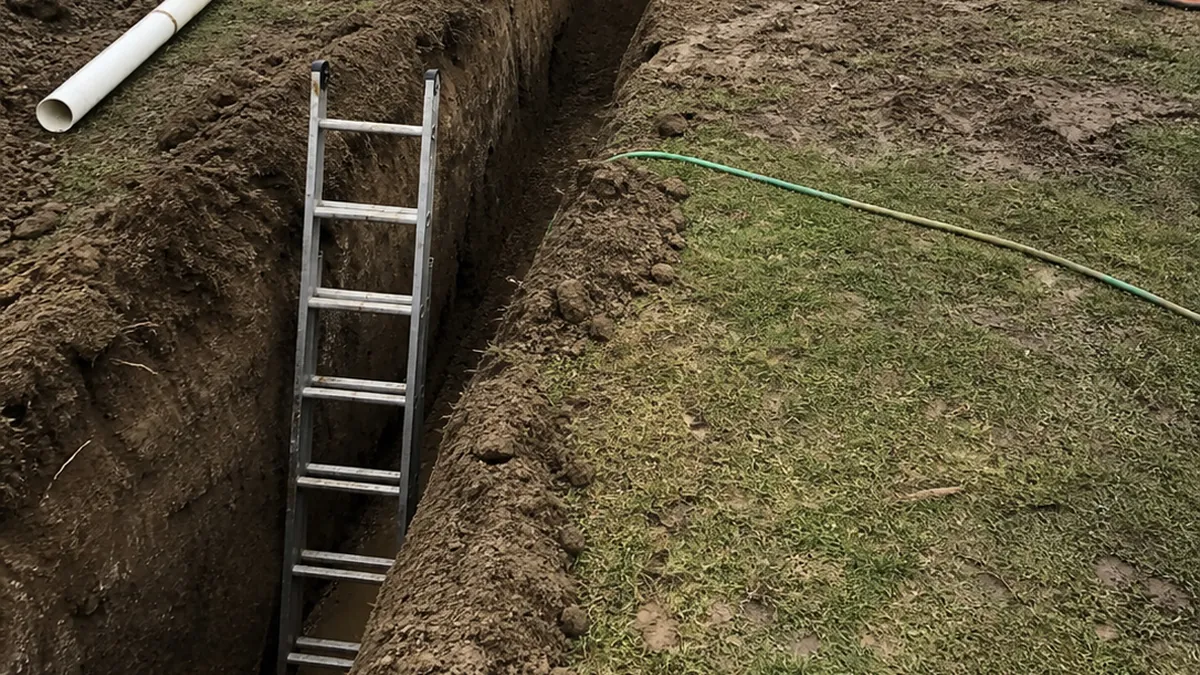
Before buying, identify the manufacturer and exact model. Find the certification record from the certifying body and confirm that its description matches the item. Save the product data with the job record when the material or source is unfamiliar. It is the same habit that keeps you right on other compliance work, like what OSHA requires when your crew digs a trench.
If your shop is considering utility work, material documentation belongs beside the estimating questions in Should Your Shop Bid on Lead Service Line Replacement?.
What is exempt from the federal requirement?
The federal requirement applies to products used to provide water for human consumption. Devices used exclusively for nonpotable service are exempt, and products manufactured exclusively for nonpotable applications may contain more lead.
The statute also excludes certain product categories: toilets, bidets, urinals, fill valves, flushometer valves, fire hydrants, tub fillers, shower valves, service saddles, and water distribution main gate valves that are 2 inches in diameter or larger.
Do not read “excluded” as “unregulated.” State or local rules may be stricter. Your code authority may impose requirements beyond the federal baseline.
Application also matters. The EPA rule explicitly covers plumbed-in devices such as drinking water coolers, water fountains, point-of-use devices, coffee makers, and refrigerator ice and water dispensers. It also addresses equipment that can appear in potable or nonpotable service, including water heaters, water meters, water pumps, and water tanks.
That is why the intended service must be clear. A component suitable for an exclusively nonpotable system is not automatically suitable for potable work. When a water heater call arrives, collect the application details before material is selected or a price is promised. The intake questions in The Water Heater Call: What to Ask Before You Quote can help your office get the basics straight.
What should you check at the counter or on the truck?
Before a fitting enters a potable water system:
- Confirm its intended use, manufacturer, and exact product number.
- Check the current certification listing, not only the package.
- Verify NSF/ANSI 372 compliance or a current NSF/ANSI 61 listing that requires it.
- Match the listing to the product, size, and material.
- Keep the product data when the source or item is unfamiliar.
- Ask your state or local code authority when the application is unclear.
If the seller cannot provide enough detail to identify the product and its certification, pause the purchase.
Frequently asked questions
Does an NSF/ANSI 61 mark alone mean a fitting is lead free? Not in every historical case. Some older NSF/ANSI 61 certifications did not include an NSF/ANSI 372 evaluation, but the current edition of NSF/ANSI 61 requires compliance with NSF/ANSI 372. Verify the current listing and applicable edition.
What does NSF/ANSI 372 prove? NSF/ANSI 372 evaluates lead content and verifies the 0.25% weighted average limit across the product’s wetted surfaces.
Does lead free mean zero lead? No. Under the Safe Drinking Water Act, covered pipes, fittings, plumbing fittings, and fixtures may have a weighted average lead content of no more than 0.25% across wetted surfaces.
Are solder and flux subject to the same limit as fittings? No. The Safe Drinking Water Act sets a limit of 0.2% lead for solder and flux.
Can I use a nonpotable fitting on a drinking water system? No. The exemption applies to the nonpotable application, not to the part itself. A product manufactured exclusively for nonpotable service may contain more lead, and installing it where water is provided for human consumption would not meet the lead free requirement.
Who certifies that a plumbing product is lead free? The Safe Drinking Water Act sets the requirement and the EPA administers it. Third-party product certification is performed by ANSI-accredited certification bodies, subject to the exceptions in the rule.
The takeaway
Treat “lead free” as a specification, not package copy. For potable work, confirm the intended use, identify the exact product, and verify a current listing that demonstrates NSF/ANSI 372 compliance. When federal exemptions or local requirements are unclear, check with your state or local code authority before installation.
Compliance checks will not stop the phone from ringing while your crew is busy. Bella answers the calls your shop misses and texts over the details. See a 10-minute demo.